
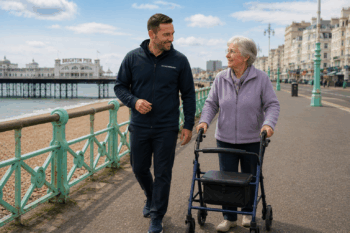
A common story we hear begins with a phone call from a worried son or daughter.
“Mum’s had a fall and been to A & E, they sent her home but now she can’t walk.”
To the family, it often feels as though the problem appeared overnight. Just a few weeks earlier mum was living independently, making her own meals, pottering around the house and insisting she was managing perfectly well.
However, when we look more closely, the fall is often not the beginning of the problem. but actually the culmination of a gradual decline that may have been developing over months or even years.
Perhaps she had stopped going out quite as often. Maybe she was avoiding the stairs more than she used to, or choosing to sit for longer periods during the day. Family members may have noticed she was moving more slowly but assumed it was simply part of getting older.
These changes can happen so gradually that both the individual and their family adapt to them without really noticing. Or as is the case for many of us, we only see our relatives infrequently and they tend not to tell us as they “don’t want us to worry” or are in denial themselves.
Over time, strength reduces and is harder to maintain, balance becomes less reliable and confidence starts to decline. People often become less active because they feel less steady, but by becoming less active they become increasingly weaker, creating a cycle that can be difficult to recognise.
Eventually something happens.
A missed step. A stumble. A slip in the kitchen.
Sometimes the physical injury is relatively minor, but the psychological impact can be significant. Fear of falling again can be just as limiting as the injury itself.
Following the fall, the person may stop walking independently, avoid standing unless necessary and become increasingly reliant on family members for support. What appears to be a sudden loss of independence is often the point at which an underlying decline becomes impossible to ignore.
In one typical scenario, a family contacted us after their mother experienced a fall at home. Although she had not sustained a major injury, she had lost confidence in her ability to walk and was reluctant to move without assistance.
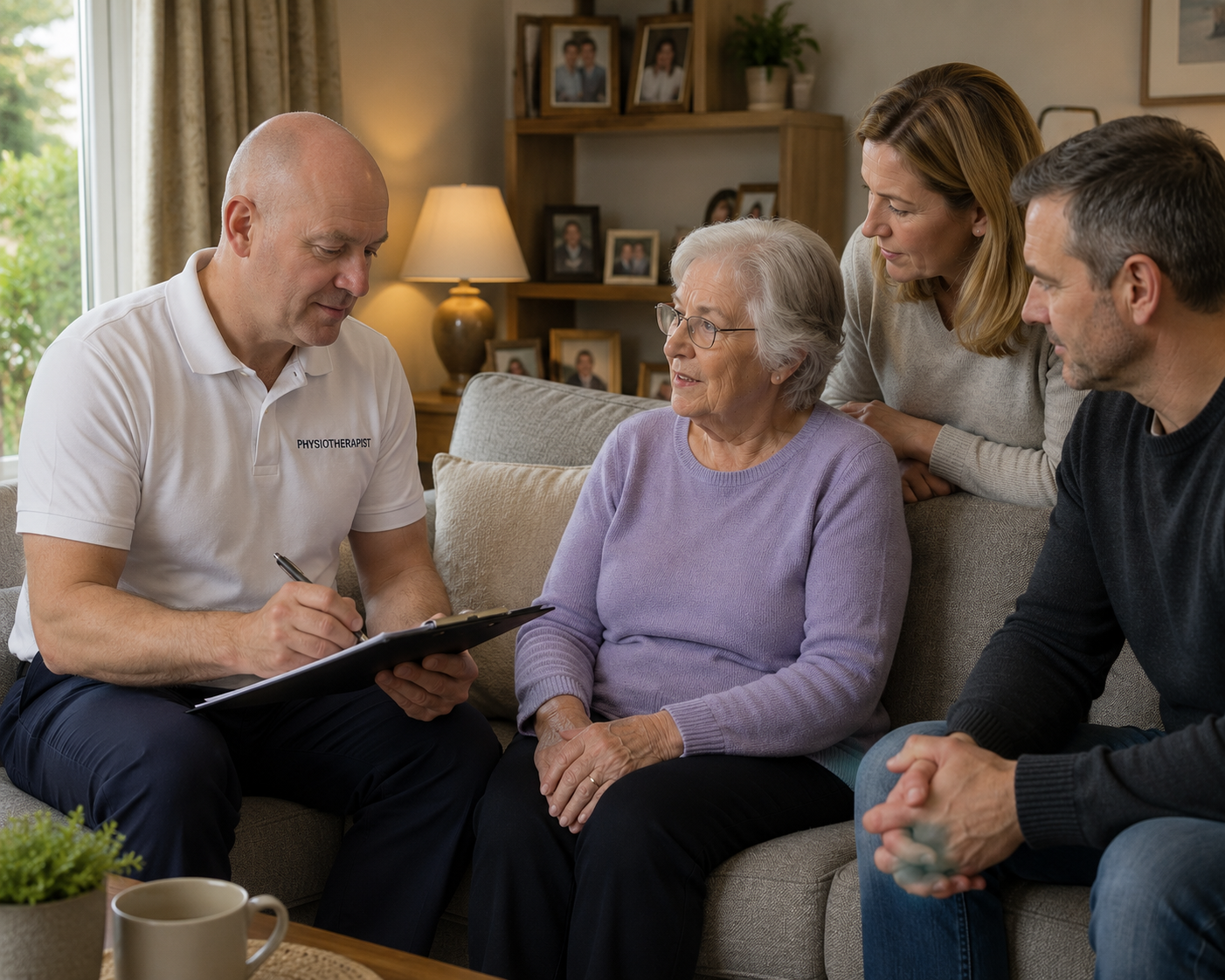
We completed a comprehensive assessment looking at her mobility which included: walking pattern, balance, lower limb strength, functional ability and the specific challenges she faced within her own home environment, we also discussed her confidence and gained an understanding of what she wanted to achieve.
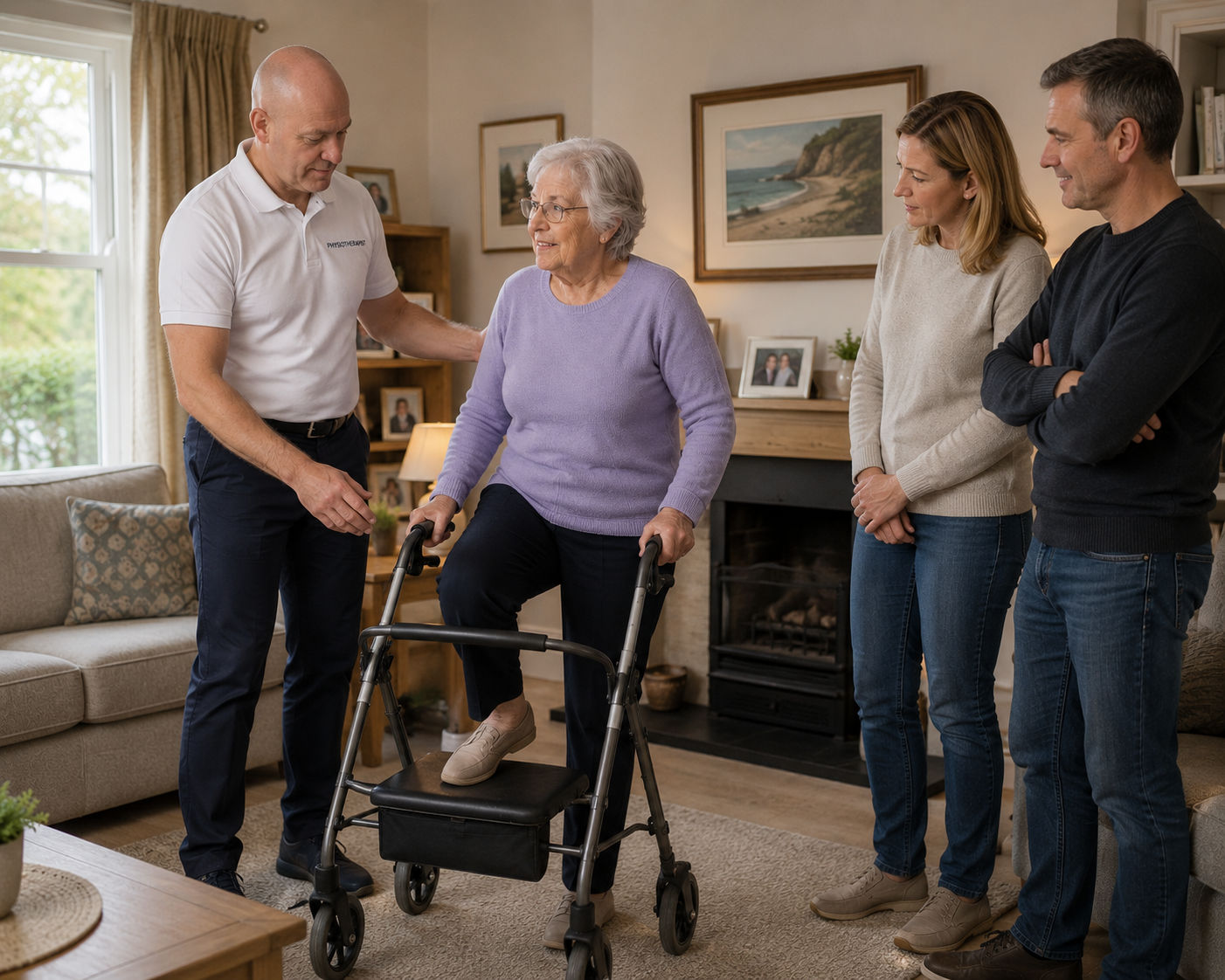
Together with her and her family, we developed a rehabilitation plan focused on restoring confidence as well as physical ability. Treatment sessions took place twice a week and included strength exercises, balance training, gait re-education and practising everyday activities that had become difficult. We made it fun and engaging with language and movements that were easy to understand. No medical speak, no gym talk.
Between appointments, family members supported the exercise programme and encouraged regular practice of agreed activities.
Over the following weeks, strength gradually improved, walking became more confident and anxiety around movement reduced. As confidence returned, activity levels increased, which further supported recovery and gave her a new level of self belief.
By the end of rehabilitation, she had returned to managing many of her daily activities independently. A small number of adaptations remained in place to improve safety, but she was once again able to move around her home with confidence and maintain the independence that was so important to her.
Stories like this are not uncommon. Often the earlier changes are recognised, the easier it is to intervene before a fall occurs. However, even after a fall, appropriate assessment, rehabilitation and family support can make a significant difference to recovery and long-term independence.
