
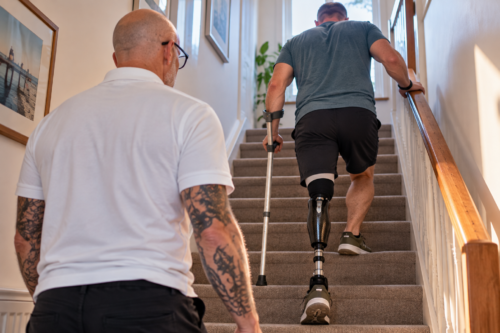
Disability affects people in many different ways. For some, it may mean living with a lifelong condition. For others, it may follow an injury, illness, surgery or a change in health. Some disabilities are visible; many are not. And no two people experience disability in quite the same way.
Physiotherapy can help people manage these changes, work towards personal goals and maintain as much independence as possible. But good physiotherapy is about more than exercises and physical progress. It is about understanding the individual, respecting their choices and making sure they feel comfortable, listened to and involved in their own care.
For many disabled people in Brighton, having physiotherapy at home can make that experience more accessible, personal and dignified.
Understanding the person, not just the condition
A diagnosis can tell us something about a person’s health, but it cannot tell us everything about their life.
Two people with the same condition may have very different abilities, priorities and ambitions. One person might want to improve their walking endurance. Another may want to transfer more easily from their wheelchair to their bed. Someone else may simply want to feel more confident getting out of the house, returning to a favourite activity or managing everyday tasks with less assistance.
That is why physiotherapy should begin with a conversation.
What matters to you? What would you like to be able to do? What is difficult at the moment? And what would meaningful progress look like in your everyday life?
These questions help shape a physiotherapy plan around the person, rather than expecting the person to fit around a standard programme.
The benefits of physiotherapy at home
Travelling to an appointment can be difficult for some disabled people. Accessible transport may be limited, journeys can be tiring, and unfamiliar environments can create additional physical or sensory challenges.
Home physiotherapy removes the need to travel to a clinic. It also allows treatment to take place in the environment where many everyday challenges occur.
This can be particularly useful when working on:
- Mobility and transfers: practising movements in the spaces and with the furniture or equipment you actually use.
- Balance and falls prevention: identifying challenges around your own home and developing strategies that are relevant to your daily routine.
- Strength and endurance: building the physical capacity needed for activities that matter to you.
- Confidence and independence: working towards doing more for yourself, where that is your goal.
- Managing changes in physical ability: adapting activities and routines when a long-term condition, injury or illness affects how you move.
The aim is not to impose an idea of what independence should look like. It is to help you achieve the level of independence, support and participation that is right for you.
Dignity, privacy and control
Receiving treatment in your own home can offer a greater sense of familiarity and control. You know your surroundings, you can choose where to sit or exercise, and you do not have to navigate an unfamiliar clinical environment.
Dignity also means having control over what happens during an appointment.
Your physiotherapist should explain what they are proposing, ask for your consent and respect your decisions. If an activity is uncomfortable, if you need a break, or if you would prefer to approach something differently, that should be part of the conversation.
Personal care needs, communication preferences, fatigue, pain and the need for assistance should be discussed respectfully and without assumptions.
You should feel able to ask questions, express concerns and disagree with a proposed approach. Physiotherapy is something we work on together.
Adapting physiotherapy to different needs

Disability is not one experience, and physiotherapy should not be one-size-fits-all.
Some people may need exercises adapted for reduced strength, restricted movement, pain or fatigue. Others may benefit from practising transfers, wheelchair mobility, balance or specific functional tasks. People with neurological conditions may need support with coordination, movement strategies or maintaining function.
There may also be practical considerations: making sure there is enough space to exercise, considering the effects of fatigue, adapting instructions, or involving a family member or carer when the person wants them involved. There are some amazing facilities for various disabilities but these can be hard to access regularly, home physio can support the work you may already be doing.
The important thing is to understand what works for you. That includes recognising what you can already do, what support you use, and what adjustments make an activity achievable.
Progress may be gradual. It may involve learning a new way to complete a task rather than returning to how it was done before. Both can be meaningful achievements.
Listening, communication and trust
A good therapeutic relationship depends on trust. That means listening carefully, communicating clearly and taking your experience seriously.
You are the expert in your own life. You know how your body feels, what your day involves and which difficulties have the greatest impact on you.
As a physiotherapist, my role is to bring clinical knowledge and experience to that understanding. Together, we can identify realistic goals, explore options and agree on a plan that makes sense for you.
I will not assume that I know what you need simply because I know your diagnosis. I will ask, listen and adapt.
Physiotherapy that works around you
At The Physiotherapists, I provide home-visit physiotherapy in Brighton and the surrounding areas. My approach is personal and tailored to the individual, with an emphasis on listening, dignity and practical goals.
Whether you want to improve your mobility, work on balance, manage the physical effects of a long-term condition or feel more confident with everyday activities, we can discuss what you would like to achieve and whether physiotherapy may help.
You do not need to fit a particular idea of what rehabilitation should look like. Your circumstances, priorities and choices matter.
If you or someone you support would like to explore home physiotherapy in Brighton, get in touch for a conversation about your needs and goals.
